
Imperial County Sex Offender Checks
The California Megan's Law Website is the official public starting point for Imperial County. California DOJ maintains the statewide registered-sex-offender database, while local police and sheriff personnel collect registration updates and send them to DOJ. That split matters. The public site is the search channel, but questions about registration at a specific Imperial County address belong with the law-enforcement agency that has jurisdiction there.
Begin with the clearest fact available. A full name helps when the person is known. A city, ZIP code, county, address, or radius search is better for neighborhood awareness. Read the conditions of use before entering the system. Then inspect the complete profile instead of drawing a conclusion from a map marker or list row. California controls which details may appear, and a missing result does not prove that no registration duty exists.
Imperial County Registry Updates
DOJ says it updates the public Megan's Law site daily from data supplied by local law enforcement. A person who enters the community after release from prison, jail, a mental hospital, or probation receives written notice of the registration duty. Registration is then due within five working days with the agency serving the residence. That agency forwards the information to the state registry.
Daily publication does not mean every fact is shown. California law limits both who appears and how an address is displayed. Timing can also reflect when a local update reaches DOJ. If an Imperial County entry seems stale, save the public details that prompted concern and contact the proper police department or Sheriff's Records Division. Do not confront the person shown.
The DOJ summary of California registration law describes how local registration data reaches the daily public system.
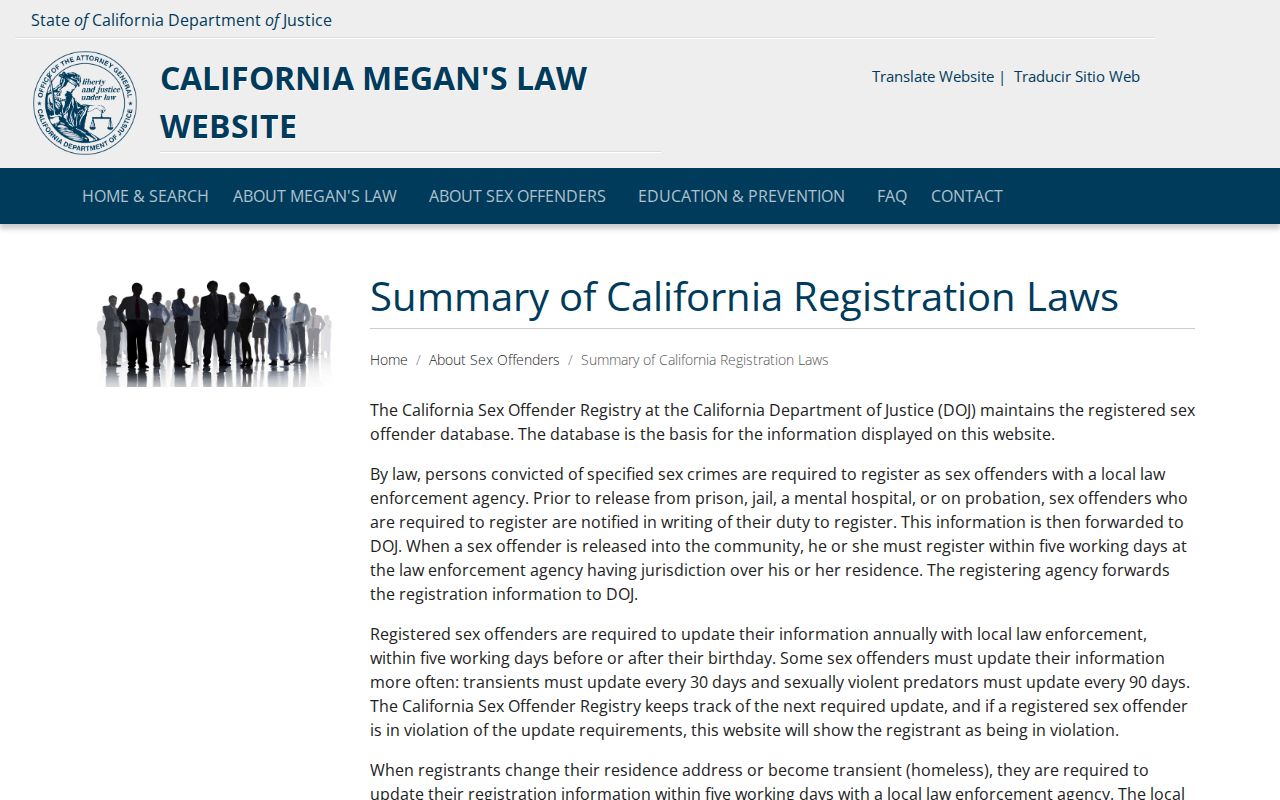
The official summary helps Imperial County readers separate the local registration appointment from statewide publication.
California Megan's Law Website Searches
The official interface supports person and place searches for Imperial County. Search modes include a name query and geographic filters such as an address, radius, city, ZIP code, or county. Results may appear in map or list form. The use acknowledgement is part of the search process because state law restricts misuse of the information.
- Open the official California Megan's Law Website and read its conditions of use.
- Choose a name search or enter an Imperial County place, ZIP code, address, or radius.
- Compare the public result list or map with the facts already known.
- Open the profile and read the address category, offense, status, and update details.
| Field Label | Type | Required | Notes |
|---|---|---|---|
| Name Search | Text | No | Use when a registrant's name is known. |
| Address / Radius | Text and map | No | Supports a local community search around an address. |
| City / ZIP / County | Text or selection | No | Choose Imperial County or a local city to narrow results. |
| Map / List View | Display control | No | Switch between geographic and list-style results. |
| Use Acknowledgement | Notice and action | Yes | Review the legal limits before using the registry. |
Imperial County Address Categories
A registry address is not presented in one fixed way. Depending on the offense and California disclosure rules, a profile may show a home address, a conditional home address, or only a ZIP code, city, and county. Some registered people fall into a category that is not public at all. These labels describe what DOJ is allowed to publish, not whether the local agency has information in its registration file.
This distinction helps prevent a common mistake. A broad Imperial County map is a public-disclosure view, not a complete roster of every person who must register. Search by name as well as place when there is a specific, lawful safety reason. For a suspected compliance issue, local law enforcement can receive the report even when the public site shows limited address detail.
The California Public Records Act supplies the broader state access framework.
Registry disclosure remains controlled by the more specific Megan's Law publication rules.
The official Megan's Law FAQ explains the limits on which registered people and details appear publicly.
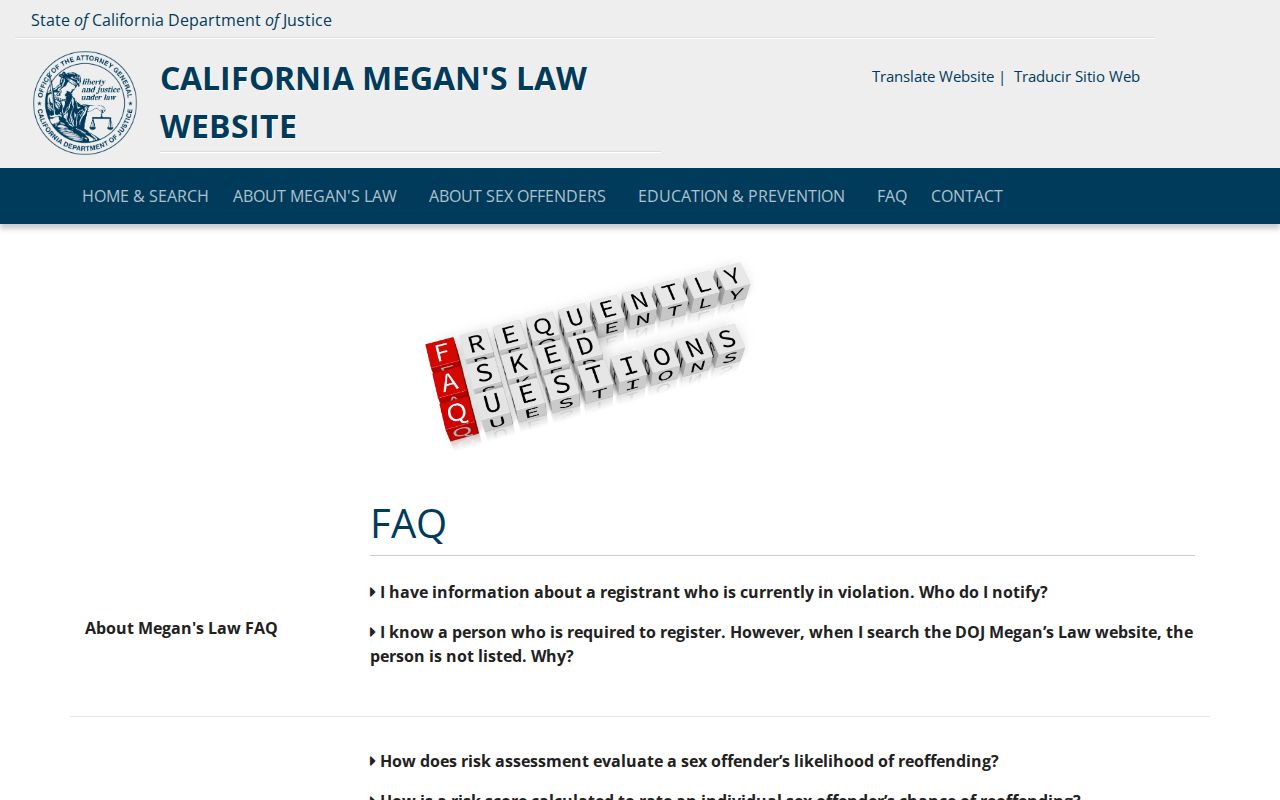
Those limits are why an Imperial County lookup should never be treated as a full local registration roster.
Registry Profiles: What They Show
A public profile combines identifying information with the details California permits DOJ to disclose. Read each field in context. The photograph and physical description help distinguish similar names. The offense field identifies the registration basis that may lawfully be published. Address and compliance fields need special care because disclosure categories and update schedules differ.
| Name & Aliases | Public identifying names associated with the registration record. |
|---|---|
| Photo & Physical Description | A public photograph when available and physical traits used for identification. |
| Registered Address | Home address, conditional address, or ZIP/city/county detail as California law permits. |
| Registerable Offense | The qualifying offense information that state law allows DOJ to publish. |
| Public Status | Whether the record is disclosed, excluded, or subject to limited address display. |
| Registration Status | Compliance information, including a violation when the registry tracks a missed update. |
Imperial County Registration Offices
Registration occurs with the agency serving the residence. The Imperial County Sheriff's Records Division registers sex and arson offenders at 328 Applestill Road in El Centro, phone (442) 265-2125. City residents should confirm the correct police or sheriff office before appearing.
Imperial County Sheriff Records
328 Applestill Road
El Centro, CA 92243
Phone: (442) 265-2125
Hours: Monday-Friday, 8:00 a.m.-4:30 p.m.
El Centro Police Records
150 North 11th Street
El Centro, CA 92243
Phone: 760-337-4529
Hours: Monday-Friday, 8:00 a.m.-4:30 p.m.
El Centro Police requires valid identification, proof of residency, and vehicle registration when applicable. Calexico and Brawley residents should verify the agency serving their address.
Registration Levels and Duties in California
California's tier system sets the minimum period before a person may seek registration relief. It does not promise automatic removal on the last day of that period. Tier 1 generally has a 10-year minimum. Tier 2 has a 20-year period. Tier 3 is lifetime registration in most cases, though a person placed there only because of risk level may have a 20-year path. Eligibility and petition results depend on the governing law and court process.
| California Tier | Minimum Period / Relief | Public Visibility |
|---|---|---|
| Tier 1 | 10 years before petitioning for relief | Disclosure still follows Megan's Law publication rules. |
| Tier 2 | 20 years | Tier alone does not determine the address detail shown. |
| Tier 3 | 20 years if based only on risk level; otherwise lifetime | Publication remains governed by California disclosure law. |
The California Courts tiered-registration relief instructions explain the petition process.
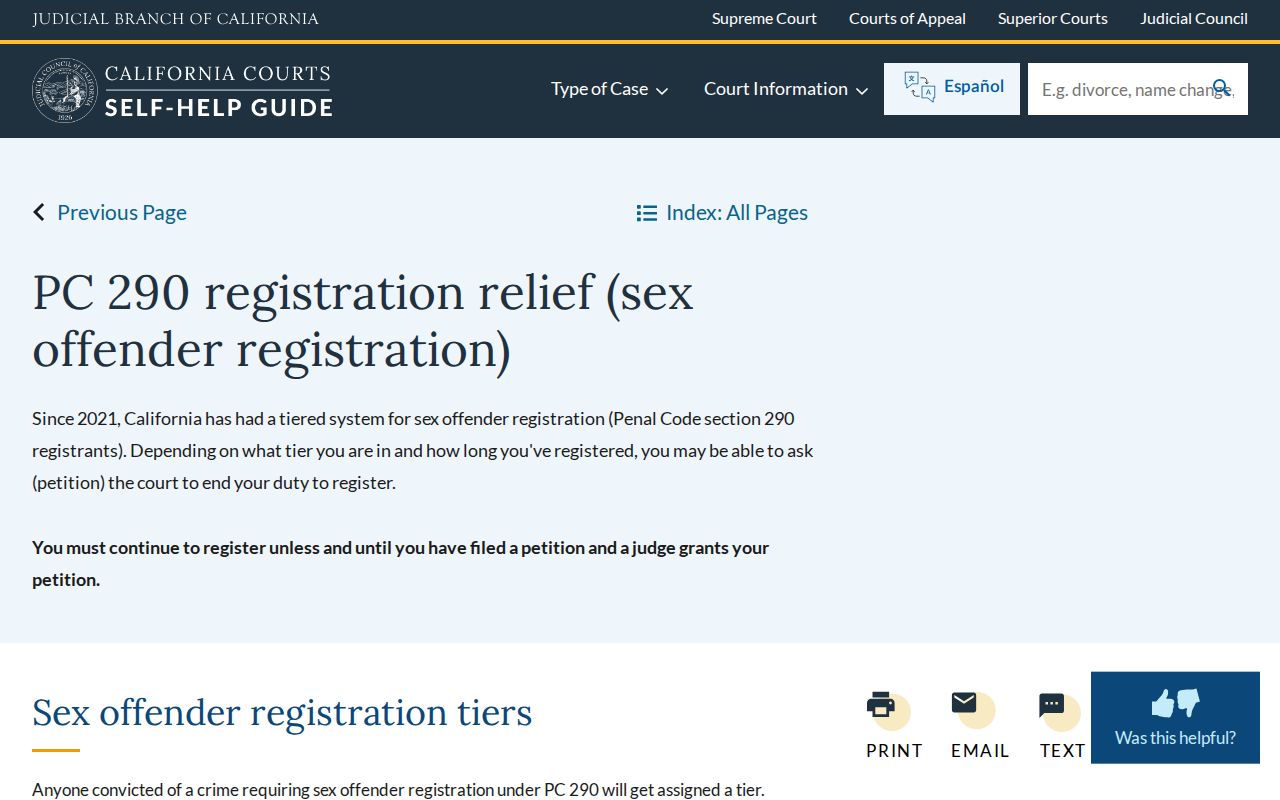
Completing a minimum period permits a petition; it does not grant automatic removal.
Imperial County Update Schedules
Registration duties continue after the first local appointment. The ordinary annual update falls within five working days before or after the registrant's birthday. A transient registrant must update every 30 days. A person designated as a sexually violent predator must update every 90 days. Other changes can also trigger a duty to report under California law.
These schedules help explain why a profile can show a compliance violation. They do not authorize a member of the public to investigate or confront anyone. Imperial County law enforcement and DOJ handle verification. Report a concrete concern through the Sheriff's Office or the police department that serves the address.
Penal Code section 290 is the official source for California registration duties.
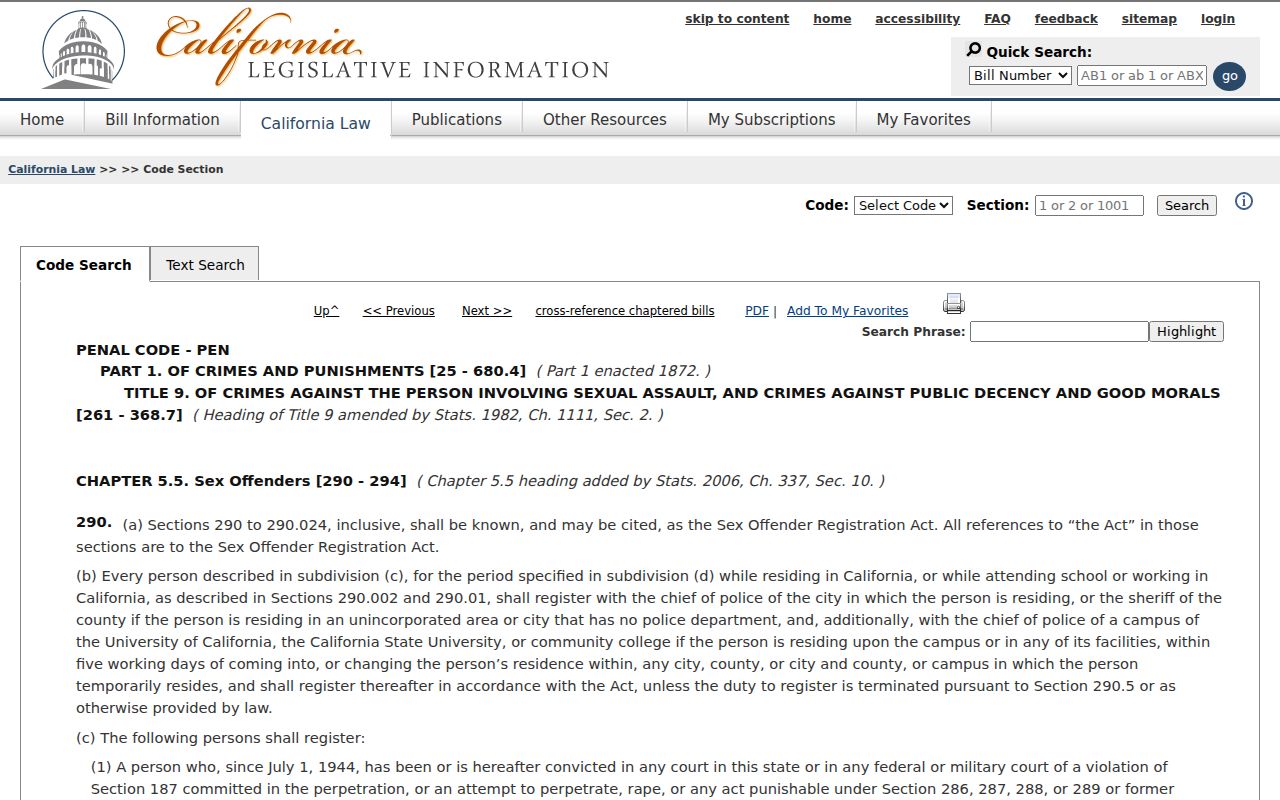
The statute supports the update schedule applied by local Imperial County agencies.
Imperial County Cross-State Searches
Imperial County sits on California's border with Arizona and Mexico, so a California-only search may not answer every lawful community-safety question. The National Sex Offender Public Website provides a national layer for participating United States jurisdictions. Use it when a person recently moved across a state line or when the relevant address is outside California.
NSOPW does not replace California Megan's Law. Each jurisdiction controls publication, so compare official state and national results and avoid unofficial registry mirrors.
Using Registry Information Lawfully
Registry information supports personal, family, and neighborhood safety planning. It should guide reasonable steps, such as reviewing an official profile, talking with children about boundaries, or giving law enforcement a factual report. It is not an invitation to punish, threaten, shame, or drive someone from a community. California decides what the public may see, and DOJ directs users to the official website instead of alternate databases.
Misuse is a crime: Penal Code section 290.46 forbids using Megan's Law information to commit a crime or to harass a registrant or family member. Report suspected non-compliance to law enforcement and never confront the person.
Penal Code section 1203.4 describes qualifying dismissal relief.
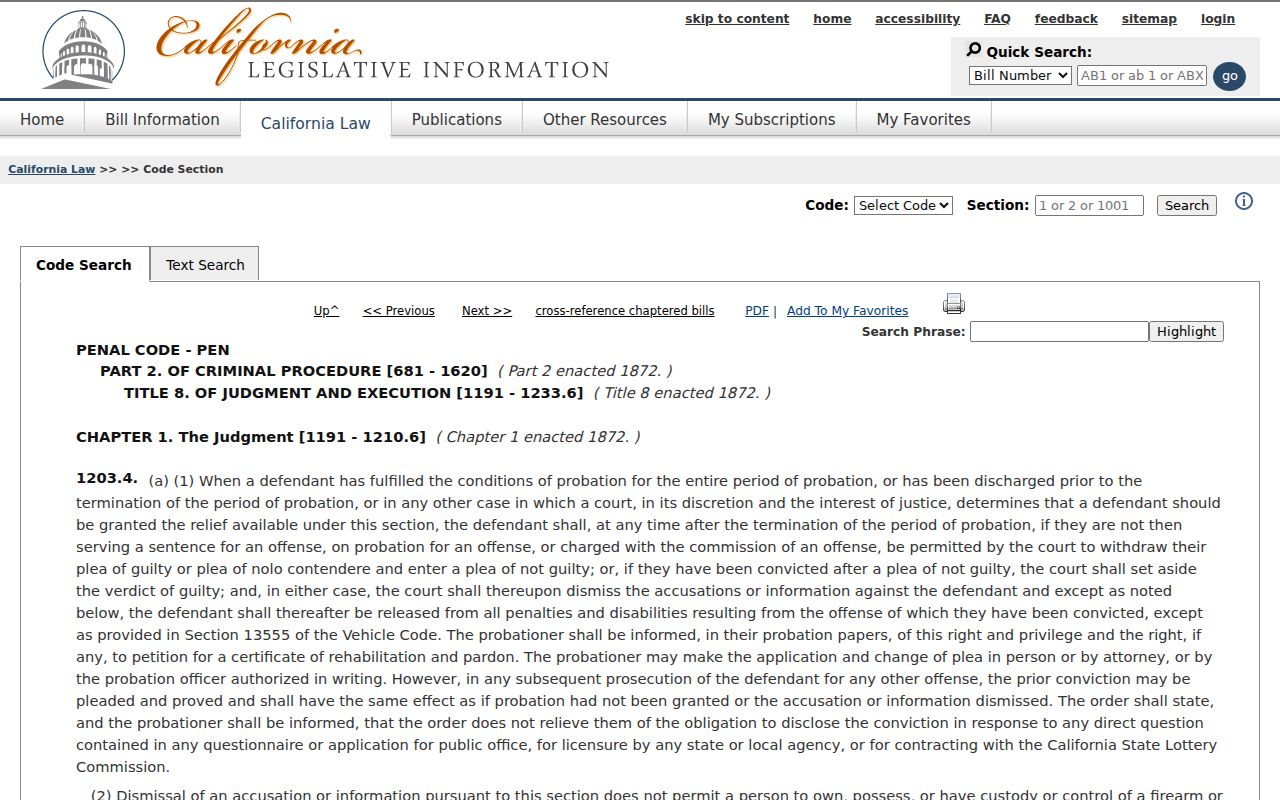
A dismissal does not by itself end a separate sex-offender registration duty.
The Imperial County Sheriff app links to sex-offender information but is not a separate registry. For urgent danger, use emergency services. Report registration concerns to the agency serving the address.